
 The person who said, “Breakfast is the most important meal of the day” probably worked for a cereal company. Yes, folks have been having breakfast ever since they started eating. The word itself refers to the literal “breaking” of the “fast” your body goes through in the eight hours you’re supposed to be sleeping. The quickest and often most satisfying way to break that fast is to snag a bowl of cereal. Breakfast cereals have only been around for just over a hundred years. As with many food origins, we got to all those sugary sweet and totally yummy cereals through an unlikely path: Getting healthy.
 The Road to Wellness
 The Road to Wellness
Back in the 1800s, the typical breakfast consisted of a lot of protein. Sounds harmless, right? Well, in the minds of the Seventh-day Adventist Church, all that bacon, sausage, eggs, pancakes, biscuits, hash browns and other breakfasty goodness were slowly killing everyone. Perhaps they overreacted a bit but they were on a mission to promote a healthier mind, body and spirit. The mind and spirit were tough nuts to crack but the body was easy: Just eliminate all the meat, tobacco and coffee. But what would people have for breakfast?
John Harvey Kellogg (yes, that Kellogg) was a member of the Seventh-Day church who took over their Western Health Reform Institute in Battle Creek, Michigan. This was the most popular cleansing spa of its day that attracted all kinds of luminaries for treatment. That treatment included a strict vegetarian diet. The first official cold breakfast cereal was Granula created in 1863. However, it took too long to make and was consider “bulky.” Kellogg started playing around with wheat and finding ways to mill it, smash it and bake it. The result was a lighter, flakier product he dubbed (ironically) Cornflakes.
In 1895, Kellogg got the patent for making Cornflakes and launched it as national brand. Around 1906, John’s brother William bought the rights for Cornflakes and went off to create the Kellogg Toasted Corn Flake Company. What was different? William chucked the “healthy” aspect and instead worked on improving the flavor, expanding the brand line and advertising.
A Post Rival
 A Post Rival
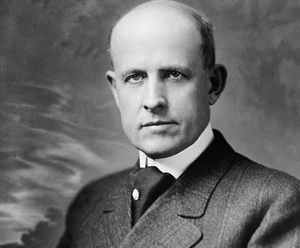
As fate would have it, Charles W. Post was one of those folks who was a patient at Kellogg’s original sanitarium. He was a salesman who embraced the all grain diet but wasn’t satisfied with just having Cornflakes for the rest of his life. He starting playing around in the kitchen and before long came up with Grape-Nuts. This was 1898 and soon folks had a variety of choices for their breakfast cereal. BTW, after Post went to the great breakfast bar in the sky, his company went on a company-buying spree. They scooped up Jell-O, Baker’s Chocolate, Maxwell House Coffee and Birdseye frozen food. All of those fell under the newly formed banner of General Foods.
Bring on the Sugar
 Bring on the Sugar
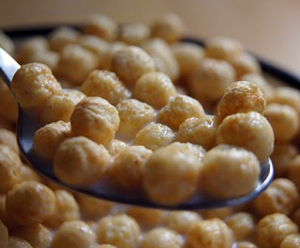
It was in 1930 when Kix came onto the market. What’s the big deal? This was the first puffed cereal. The marketers realized that the best way to sell cereal was to sell it to kids. That meant taking out the fiber and adding in the sugar. Yes, back then fiber was looked on as bad for digestion. In 1953, Kellogg’s brought us Sugar Smacks that had a whopping 56% of sugar by weight. Dozens of sugary cereals followed along with their cartoon mascots Tony the Tiger, Snap, Crackle, Pop and the always-jolly Captain Crunch.
Today, it appears we’ve swung back from the sugar and embraced the fiber. Those cereals you remember as a kid might taste a lot different. For breakfast to be the most important meal of the day it has to be a healthy breakfast. Apparently, Kellogg had it right all along.